Latency Thresholds and Their Effect on Approval Success in Point-of-Sale Credit Authorizations for Regional Retailers
Lars Russell · Aug 22, 2026
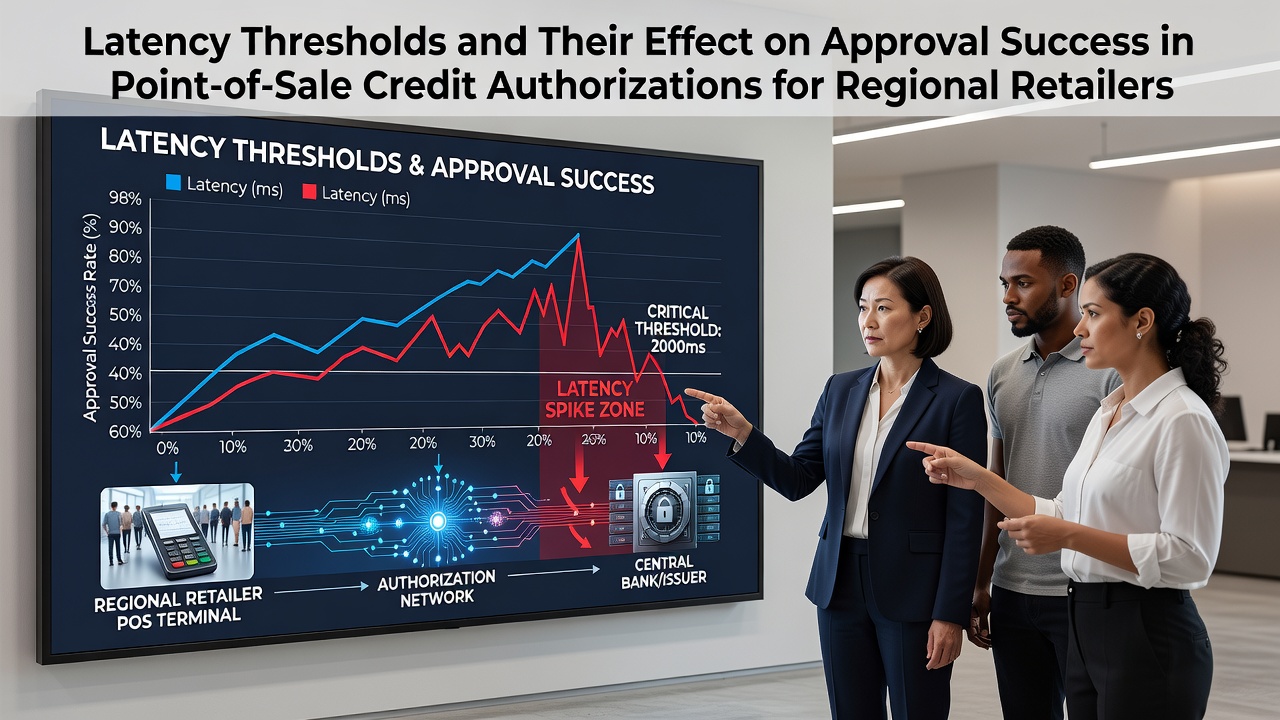
Latency Thresholds and Their Effect on Approval Success in Point-of-Sale Credit Authorizations for Regional Retailers
Regional retailers rely on point-of-sale systems where even brief delays in data transmission can determine whether a credit authorization succeeds or fails. Latency thresholds represent the maximum acceptable time for a transaction request to receive a response from card issuers or networks, and these limits directly influence approval rates in physical store environments.How Latency Thresholds Operate in Credit Authorizations
Payment processors set specific time windows, often measured in milliseconds, within which an authorization request must complete its round trip from the terminal to the issuing bank and back. When response times exceed these thresholds, systems may interpret the delay as a failed connection, triggering automatic declines or requiring manual reattempts. Regional retailers encounter this issue more frequently because their connections often route through shared networks rather than dedicated high-speed lines used by larger chains.
Data from payment network reports indicate that thresholds typically range between 1,500 and 4,000 milliseconds depending on the card brand and processor configuration. Exceeding these windows reduces approval success because issuers prioritize real-time risk assessment that cannot proceed without complete transaction data. Observers note that regional locations in areas with variable broadband service experience higher rates of these timeout events during peak shopping hours.
Impact on Approval Rates for Regional Operations
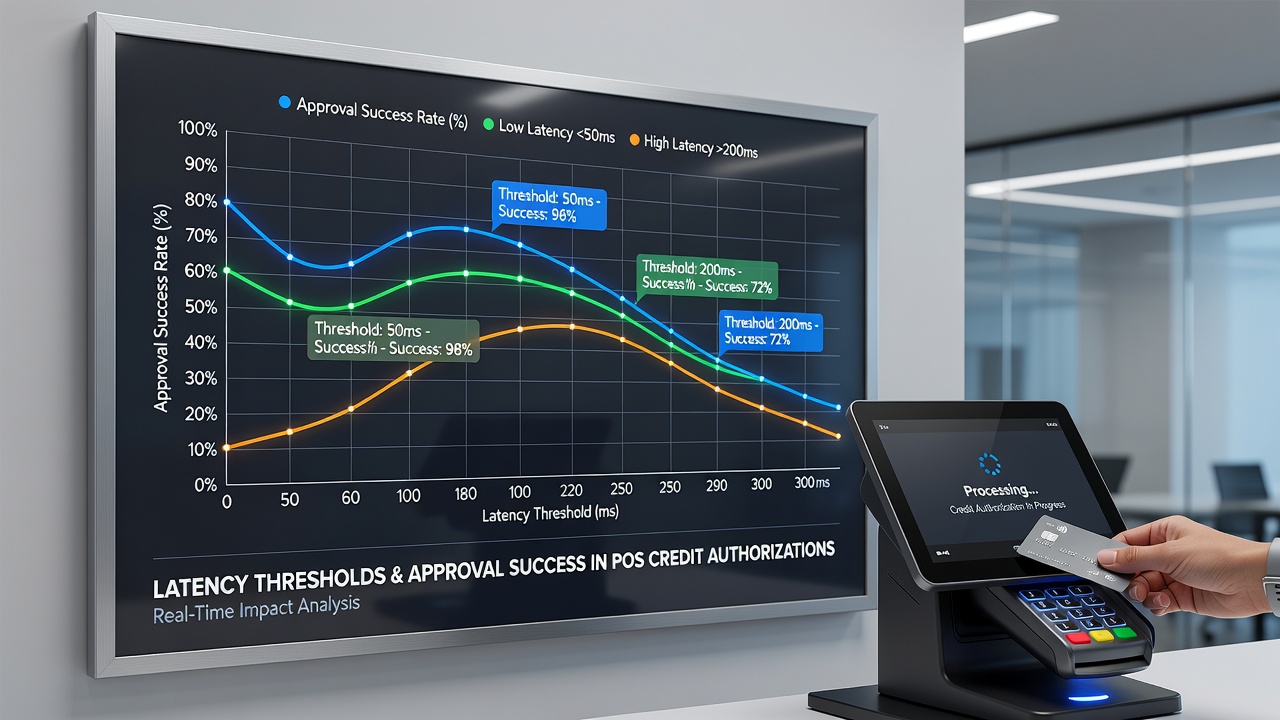
Studies examining transaction logs from mid-sized retailers show a measurable drop in approvals once latency surpasses 2,000 milliseconds. One analysis of several hundred stores found that each additional 500 milliseconds beyond the baseline correlated with a 3 to 7 percent decrease in successful authorizations for credit cards. This pattern appears consistently across different regions where infrastructure varies.
Retailers using older terminal hardware face compounded effects because these devices process encryption and formatting steps more slowly before even sending the request. When combined with network delays, the total time often breaches issuer limits, leading to declined transactions that might otherwise have been approved. Figures from industry monitoring services reveal that stores in rural or suburban zones report elevated decline rates tied to these combined factors.
Regional Infrastructure Variations and Timing Challenges
August 2026 data from payment service providers highlight ongoing differences in network performance across North American and European regional markets. Retailers in areas still transitioning to fiber optic connections continue to encounter latency spikes during high-volume periods, whereas those with upgraded infrastructure maintain steadier response times. These variations affect approval consistency even when the underlying credit risk remains identical.
Payment networks have adjusted some routing protocols to prioritize smaller merchant traffic, yet the improvements depend on local carrier cooperation. Reports from the Federal Reserve Bank Services document how regional processors in the United States experience different average response windows compared with urban centers. Similar patterns appear in Canadian retail settings according to Bank of Canada payment system reviews.
Technical Factors Influencing Threshold Compliance
Terminal configuration plays a central role because settings for timeout values must align with both processor requirements and issuer expectations. When retailers operate multiple payment devices on the same connection, bandwidth contention can push individual transactions past their allocated time. Software updates that optimize data packet sizes have helped some operators reduce average latency by measurable amounts without hardware replacement.
Encryption overhead adds another layer since each transaction requires secure formatting before transmission. Regional retailers using legacy systems sometimes lack the processing power to complete these steps quickly enough, creating bottlenecks at the device level rather than the network. Monitoring tools now allow store managers to track per-transaction timing and identify specific terminals that consistently approach or exceed thresholds.
Strategies Observed in Retail Environments
Some regional operators have implemented local caching for non-sensitive elements of the authorization request to shorten overall processing time. Others have shifted to processors offering dynamic routing that selects lower-latency paths based on real-time conditions. These adjustments demonstrate measurable gains in approval percentages when applied consistently across store locations.
Training staff to recognize timeout messages and retry transactions promptly also contributes to maintaining flow during busy periods. Data collected from stores adopting these practices shows fewer abandoned carts and improved completion rates compared with locations that leave timing issues unaddressed.
Conclusion
Latency thresholds continue to shape approval outcomes for regional retailers because they intersect directly with both network performance and device capabilities. As payment systems evolve, maintaining response times within established windows remains a practical requirement for sustaining authorization success rates. Retailers tracking these metrics over time gain clearer visibility into operational factors that influence daily transaction results.