Payment Processing Services: Core Mechanisms and Global Infrastructure
Logan Weber · Aug 22, 2026
Payment Processing Services: Core Mechanisms and Global Infrastructure
Payment processing services form the backbone of modern commerce by handling the authorization, clearing, and settlement of electronic transactions between consumers and merchants, and observers note that these systems manage billions of daily exchanges across retail, e-commerce, and service sectors. Data from industry reports indicate that global transaction volumes reached over 1.2 trillion in 2025, with projections showing continued growth through August 2026 as digital adoption expands in emerging markets.
At its foundation a payment processor acts as an intermediary that connects a merchant's point-of-sale system or online checkout to the card networks and financial institutions involved, and this connection allows real-time verification of funds while routing transaction details securely through established protocols. Researchers at institutions like the Federal Reserve Bank of New York have documented how these services reduce manual reconciliation errors by up to 85 percent compared to older paper-based methods.
How Payment Processing Works in Practice
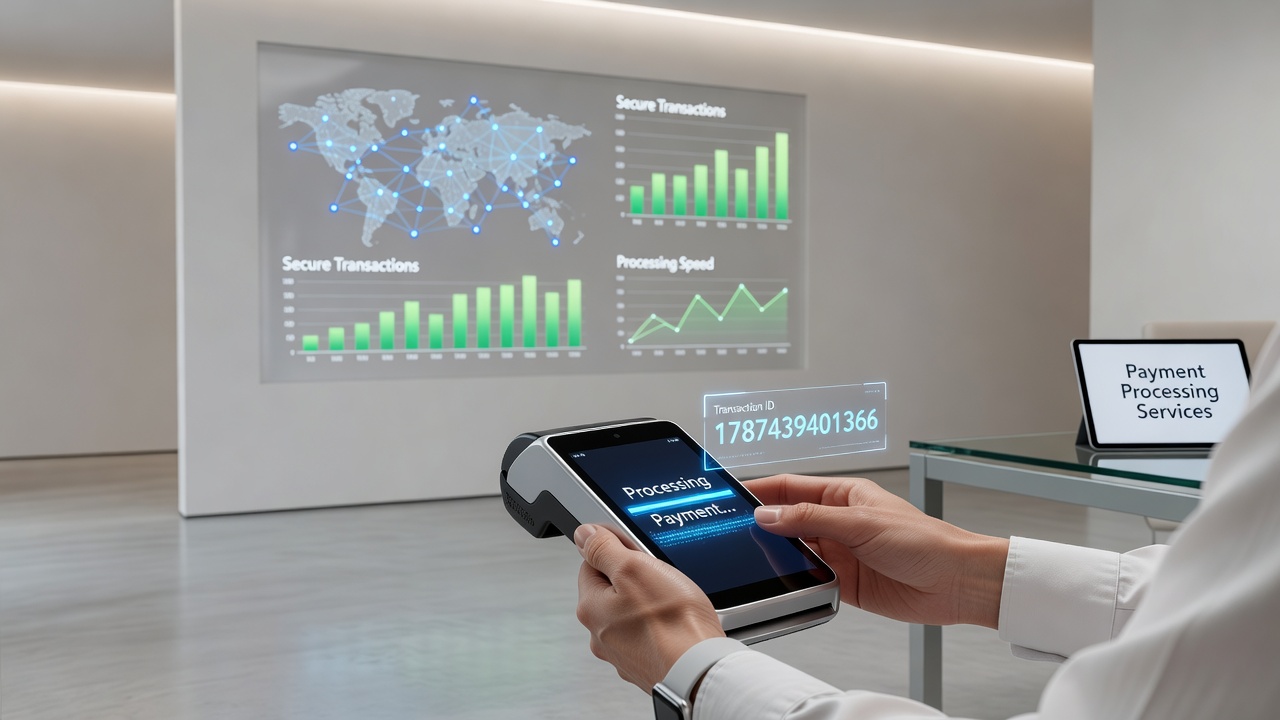
Transaction flow begins when a customer presents a card or digital wallet at checkout, prompting the merchant's terminal to send encrypted data to the processor for authorization, and the processor then forwards the request to the issuing bank which checks account status and available credit before returning an approval or decline code. Clearing follows authorization as the processor batches transactions and submits them to the card networks for netting, whereas settlement occurs when funds move from the issuing bank through the processor to the merchant's account, typically within one to three business days depending on the agreement.
Those who study these systems often highlight the role of acquirers, entities that maintain merchant accounts and assume the risk of chargebacks, while payment gateways handle the technical interface for online transactions by encrypting sensitive information and complying with standards such as PCI DSS. Figures from the European Central Bank reveal that cross-border processing volumes in the eurozone grew by 12 percent year-over-year as of mid-2025, driven by expanded use of unified payment interfaces.
Types of Payment Processing Services Available
Traditional merchant account providers offer dedicated accounts with customized pricing structures that include interchange fees plus markups, and these arrangements suit larger retailers needing dedicated support, whereas payment facilitators aggregate multiple merchants under a master account to simplify onboarding for smaller businesses. Independent sales organizations often resell services from larger processors, providing localized support and equipment leasing options that help new merchants enter the market quickly.
Digital wallet integrations and alternative payment methods have become standard offerings, with services now supporting options like bank transfers and buy-now-pay-later programs alongside card transactions, and data from the Bank of Canada shows that non-card methods accounted for 28 percent of processed volume in 2025. Processors also deliver reporting dashboards that track daily volumes, refund rates, and payout schedules, allowing merchants to monitor cash flow without separate accounting tools.

Regulatory Frameworks Across Regions
Compliance requirements vary by jurisdiction, with the United States enforcing rules through bodies like the Consumer Financial Protection Bureau that oversee fair lending practices in card processing, while Canada's Office of the Superintendent of Financial Institutions sets capital and operational standards for entities handling domestic transactions. In the Asia-Pacific region the Monetary Authority of Singapore has implemented licensing regimes that require processors to maintain local data centers and conduct regular security audits.
Those who've examined regulatory updates note that new guidelines effective in August 2026 will require enhanced disclosure of foreign exchange margins on multi-currency transactions, and this change stems from collaborative efforts among central banks to improve transparency. Processors must also navigate data localization laws in markets such as India and Brazil that mandate storage of transaction records within national borders, adding layers of infrastructure investment for global providers.
Technological Advancements and Integration Trends
Cloud-based platforms now allow processors to scale capacity during peak seasons without maintaining excess hardware, and API-driven connections enable seamless integration with inventory management and customer relationship systems. Tokenization services replace card numbers with unique identifiers that reduce exposure during storage, while machine learning models assist in routing transactions to the most cost-effective networks based on real-time pricing signals.
One study from the University of Melbourne documented efficiency gains of 22 percent in settlement times after merchants adopted unified APIs across multiple processors, and similar findings appear in reports issued by the Reserve Bank of Australia. These developments support broader adoption in sectors like healthcare and education where recurring or installment payments require reliable batch handling and reconciliation features.
Conclusion
Payment processing services continue to evolve alongside shifts in consumer behavior and regulatory expectations, providing the secure rails that enable global commerce while adapting to new payment preferences and compliance demands. Data indicates steady infrastructure investment through 2026 as providers expand capabilities in real-time settlement and multi-region support, ensuring merchants of varying sizes can participate in expanding digital economies.