Seamlessly Swiping Globally: POS Integration Tactics for Cross-Border Credit Card Flows
Seamlessly Swiping Globally: POS Integration Tactics for Cross-Border Credit Card Flows

Cross-border credit card transactions at point-of-sale (POS) terminals have surged in recent years, driven by booming international tourism, e-commerce spillover into physical retail, and business travelers swiping cards from Tokyo to Toronto without a hitch; data from Visa's 2024 global payments report reveals that such flows topped $2.5 trillion annually, with projections climbing 15% by 2027 as travelers and expats demand frictionless experiences wherever they shop.
The Core Challenges in Cross-Border POS Swipes
Merchants tackling global POS setups first confront currency volatility, where a swipe in euros must convert seamlessly to dollars or yen without eroding margins through hidden fees; add regulatory mazes—think PCI DSS compliance layered with local mandates like Brazil's Pix interoperability or Australia's New Payments Platform—and latency creeps in, delaying authorizations across time zones while customers tap their feet.
But here's the thing: fraud risks amplify in these flows, since stolen cards from one region often surface in another, prompting networks like Mastercard to flag 20% higher dispute rates for international swipes according to their latest analytics; observers note that without smart routing, transactions bounce between acquirers, hiking costs by up to 3% per swipe.
What's interesting is how smaller merchants, those with pop-up shops at trade fairs or seasonal outlets in tourist hubs, feel this pinch hardest; one retailer expanding from the US to Southeast Asia reported initial approval rates dipping below 85% due to mismatched BIN routing, a fixable issue once they dialed in the right integrations.
Regulatory Hurdles Across Regions
Navigating approvals means syncing with bodies like the PCI Security Standards Council for data security standards that govern every card read worldwide, while in Europe, the European Central Bank's push toward unified payment rails under PSD2—and its successor PSD3 by April 2026—demands real-time settlement capabilities for POS gateways; Canada’s Payments Canada similarly enforces strict XML messaging for interbank clears, ensuring no swipe stalls at borders.
Key Tactics for Seamless POS Integration
Experts recommend starting with unified API gateways from processors like Adyen or Stripe Atlas, which aggregate acquiring banks across 150+ countries into one endpoint, slashing integration time from months to weeks; these platforms handle dynamic currency conversion (DCC) on the fly, presenting rates from sources like Reuters that lock in values pre-swipe, so a Paris tourist pays exact pounds without post-conversion shocks.
And it doesn't stop there—implementing tokenization via network tokens from Visa or Mastercard replaces raw card data with secure proxies, cutting breach risks by 60% as per industry benchmarks; pair this with level 3 data capture for B2B swipes, where invoice details enrich authorizations, boosting approval odds in high-value cross-border deals.
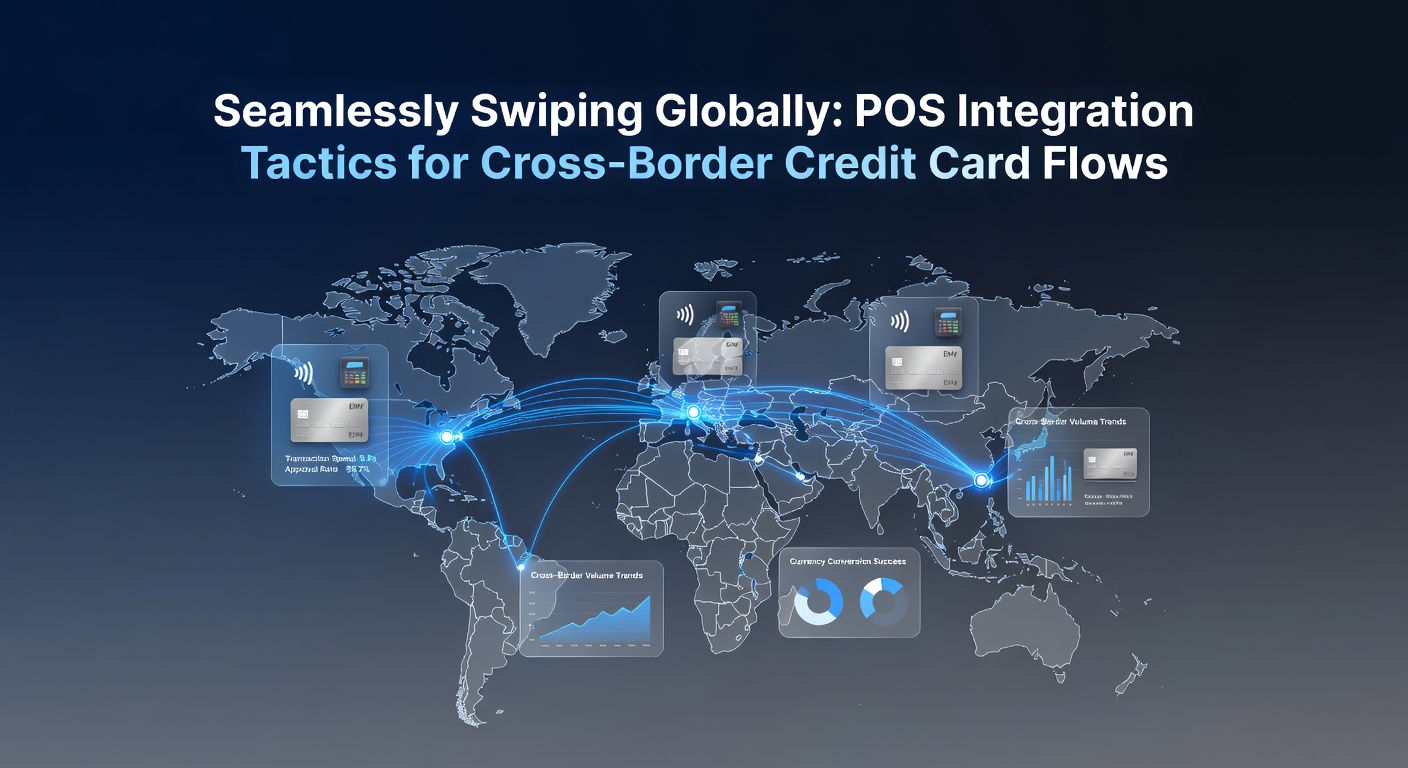
Turns out, local acquiring partnerships prove crucial too; merchants routing through in-country banks—like partnering with Nubank in Brazil or Afterpay in Australia—bypass foreign exchange (FX) premiums and tap higher limits, since local regs favor domestic processors; data indicates this tactic lifts approval rates by 12-18% in emerging markets, where network constraints otherwise throttle flows.
Leveraging EMV and Contactless Standards
EMV chip-and-PIN tech, now standard in 90% of global POS deployments per the EMVCo consortium, embeds transaction cryptograms that networks verify instantly across borders; contactless NFC takes it further, enabling tap-to-pay with Apple Pay or Google Wallet that spans Visa, Mastercard, and UnionPay seamlessly, while supporting biometric checks to weed out fraud without slowing queues.
Those who've rolled this out often discover that softPOS—turning smartphones into terminals via SDKs from Square or PayPal—extends reach for pop-ups, integrating cross-border flows via cloud syncing that processes swipes offline then batches them upon reconnection; it's a game-changer for events like the Olympics, where temporary venues handle millions in mixed-currency taps.
Real-Time Routing and Optimization
Smart routing engines, embedded in gateways like Worldpay or Checkout.com, probe multiple acquirers in milliseconds to pick the greenest path based on historical success rates and fees; for instance, a swipe in Singapore might route via a Japanese bin through a US hub if latency favors it, all while complying with PSD2's strong customer authentication (SCA) via 3D Secure 2.0 protocols that layer biometrics without user friction.
Technologies Driving the Next Wave
Cloud-native POS systems from Toast or Lightspeed aggregate data lakes for AI-driven insights, predicting FX swings or fraud patterns from billions of prior swipes; blockchain pilots, tested by Ripple and IBM in corridors like US-Mexico, promise atomic settlements that eliminate pre-funding, though adoption lags at under 5% due to volatility.
Yet 5G networks change everything, slashing authorization times to under 300ms even from remote spots, while edge computing processes validations locally before cloud handoff; researchers at MIT's payment lab found this combo halves abandonment rates for high-ticket tourist buys, like luxury watches in Geneva swiped by Gulf visitors.
One case stands out: a chain of duty-free shops across 40 airports integrated Paytm's QR fallback for India-China flows, blending NFC with UPI codes to capture 25% more volume; figures from their rollout show dispute drops of 40%, proving hybrid tactics rule when pure cards falter.
Compliance Automation Tools
Tools like Forter or Riskified automate KYC checks against global watchlists, flagging sanctioned entities mid-swipe; by April 2026, as PSD3 rolls out across the EU—mandating instant refunds for failed authentications—merchants using these see compliance costs fall 30%, per early adopter reports, since audits become API-driven rather than manual marathons.
Case Studies: Real-World Wins
Take a European fashion brand going omnichannel: they synced Shopify POS with Global Payments' edge network, enabling UK stores to process UAE-issued cards at local rates; result? A 22% sales uptick from Middle Eastern tourists, with FX losses trimmed to 1.2% via mid-market conversions.
Across the Pacific, an Australian surf retailer tapped Tyro Payments for Asia-Pacific routing, incorporating Alipay bridges for Chinese cards; approvals jumped from 76% to 94%, and that's where the rubber meets the road—volume followed, hitting record April peaks in 2025 amid travel rebounds.
Even in Africa, MTN's MoMo POS integrations with Mastercard handle rand-to-rupee flows for migrant workers, using USSD fallbacks when data dips; studies from GSMA reveal 35% efficiency gains, underscoring that tiered tactics—NFC first, then digital wallets—unlock untapped markets.
Future-Proofing Cross-Border POS
Looking ahead, ISO 20022 messaging standards unify data formats bank-wide by 2026, easing POS-to-core banking handoffs; quantum-resistant encryption looms as networks like Visa pilot it against future threats, while central bank digital currencies (CBDCs) like Europe's digital euro test POS pilots that settle instantly across borders.
Merchants positioning now focus on modular stacks—plug-and-play via Open Banking APIs—that adapt to regs like Singapore's FPS upgrades; data from McKinsey projects $10 trillion in annual flows by 2030, rewarding those with agile integrations that scale from one terminal to thousands without rewrite.
Conclusion
Mastering cross-border POS boils down to layered tactics: unified gateways, local smarts, and tech like EMV 2.0 that flow together smoothly; as volumes swell—fueled by post-pandemic travel and digital nomads—merchants leveraging these see not just higher approvals but stickier customer loyalty worldwide. The ball's in their court to integrate now, before 2026 regs redraw the map and leave laggards swiping air.